On this page
Site Organisation
What's in a Name?
Campaign Overview

Kia ora koutou. Welcome to
www.newzealandwars.co.nz

This Website ..

This website has been set up to bring together information about the New Zealand Wars which were fought in New Zealand between Maori, new settlers and the Crown throughout most of the 19th century. 

Opinion as to when the wars actually began and finished, or what they were all about, varies. It depends a little on which historian you're reading. There is also debate as to what the wars should be called ..


After the attack on Gate Pa, near Tauranga, 1864

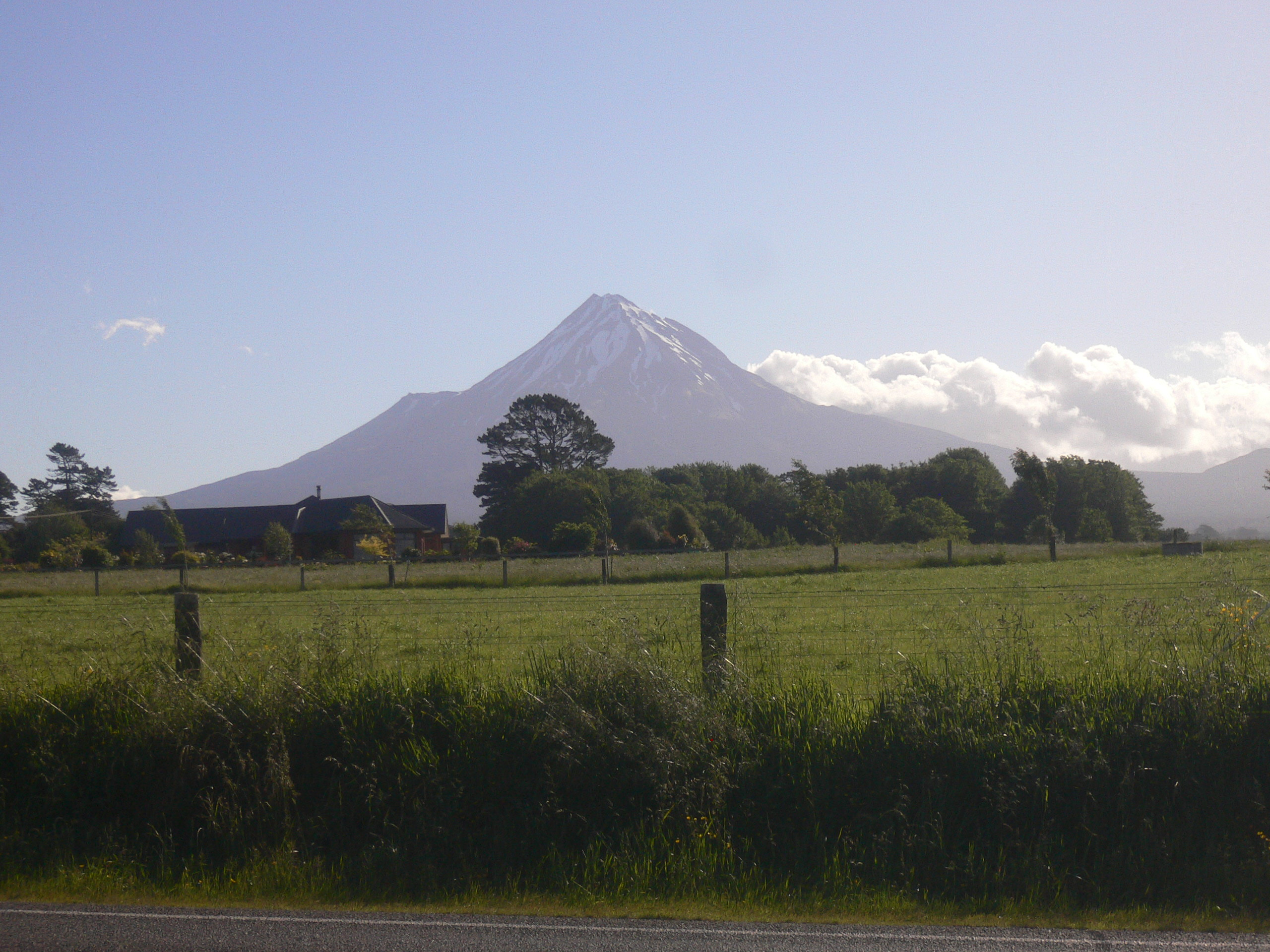
Mount Taranaki

Waitara, North Taranaki

Rangiriri Cemetry


How the Site is Organised

Causes                       what caused the New Zealand wars ?

Campaigns                  the battles, skirmishes, conflicts

Consequences            impacts of war esp for Maori

Library                        books, web links, other sources

Landscape                   the current wars' landscape

Studies / Research     NZ Wars as focus of study

Gallery                         a photo gallery


Paterangi, near Hamilton

Pukerangiora, North Taranaki

Kororipo Pa, Kerikeri


Vincent Ward's 'River Queen'

Vincent Ward's movie 'The River Queen' was released in 2006 and was premiered (for New Zealand audiences) in Whanganui, where the movie was historically set, and actually filmed. One of the main characters of the movie was undoubtedly the beautiful Whanganui River.

Somewhere amidst all of the controversy that attended the movie's opening, there was actually quite a good movie.   See the link below for a brief review of River Queen as an historical movie; the review is really an 'historians view' of River Queen as 'reel history' versus 'real history':

http://www.newzealandwars.co.nz/gallery.html


'The New Zealand Wars'

What's In A Name?

The 'New Zealand Wars' are known by various names. 

Several generations ago, the New Zealand Wars were generally called the 'Maori Wars'. This name originated from the 19th century British practice of naming their wars after their foe eg the Zulu Wars, or the Indian Mutiny or the Maori Wars. Keith Sinclair used this term in the title of his important 1957 book, The Origins of the Maori Wars. However,  'the Maori Wars' is no longer in favour and is seldom used. Historians like John Pocock have argued that the term is divisive - it sets up a 'them and us' situation. The name also hints at Maori responsibility for the wars.

In the 1970s, the name the Land Wars became popular for awhile, and was used by some historians like Keith Sorrenson. This name emphasised conflict over  land as the primary cause of war. Generally speaking, this is the name (and the view) that Maori people prefer. Nga Pakanga Whenua O Mua (used in the title of this website) means 'the wars fought over the land many years ago' (the Land Wars). This is a term used amongst Maori elders in areas like north Taranaki where war actually took place. However, Maori elsewhere may well use different names, especially Maori who did not face the British Army or the later Armed Constabulary. 

Another Maori name often used is Nga Pakanga Nu Nui O Aotearoa, or 'the great wars of Aotearoa' (the New Zealand Wars).  This name appears on a small number of monuments to the wars. And a recent publication on Maori sources issued by the National Archives in Wellington refers to the wars simply as Nga Pakanga O Aotearoa.


Maori Rifle Pits, Te Arei Pa, Waitara

In the 1980s or so, the Anglo-Maori Wars emerged. Alan Ward first used this name in an important essay which raised questions as to causes of the wars. The name won general acceptance, especially amongst historians like Keith Sinclair (who had earlier preferred 'The Maori Wars'). This new name (and Ward) emphasised that the wars were in reality a conflict between New Zealand's two peoples, Maori and new settlers from Britain.

Another name, the Colonial New Zealand Wars is also used, especially by Tim Ryan and Bill Parham in the title of their lavishly illustrated and well written book. From time to time, some historians have suggested another name, the New Zealand Civil Wars. This name suggests that the wars were a civil war (much in the American sense) fought between Maori and new European settlers/the Crown.  

The notion of a 'New Zealand Civil War' hasn't really taken off in New Zealand. Some historians like Pocock have argued that Maori society was too fragmented and did not represent a 'single polity'. Rather, small autonomous (and divided) tribes waged war against the singular Crown. So the argument goes; and fair enough, but it isn't entirely convincing because Maori people, if not united 'on the ground', did see themselves as representing a united interest - defence of land and te tino rangatiratanga (sovereignty), against the Crown. 

Also, the comparison often made between New Zealand's wars and the American Civil War isn't really adequate - it is probably better to compare our wars to those waged against Native American peoples, especially those on the Great Plains in the 1860s-70s. And, on the question of 'civil wars', some historians have recently suggested that the New Zealand Wars were really civil wars fought between a number of Maori tribes, with settlers and the Crown almost relegated to the role of bystanders. 

It is true that the later 1860s were dominated by significant kupapa ('friendly') Maori involvement, fighting against 'rebellious' Maori. But the Crown interest was always at the core of the otherwise significant involvement of kupapa Maori. Similarly, the British Army used few Maori to wage their campaigns. And, it was the British Army that 'won' the wars for the Crown, without the help of Maori. Therefore, one could argue that it is a little disingenuous to suggest that the New Zealand wars were really wars fought between Maori tribes. 

So, what should we call these wars? Do names really matter? What's in a name ..

Yes, they do. Putting 'names to history' is an important process. The overwhelming favourite name used these days is undoubtedly the New Zealand Wars. This fairly old name has been much popularised by James Belich who is the most prominent historian of these wars. Belich used the term in the title of his important 1985 book of course; and he justified its use towards the end of that significant and challenging narrative. The name was also used earlier by James Cowan, when he published his two volume narrative of war on the edges of empire in the early 1920s. 

Most historians and writers do choose their preferred name carefully. Preferred names suggest a certain personal view as to issues like causes, participants, the progress and importance of particular conflicts, and outcomes. Others use names like the 'New Zealand Wars' for the most part uncritically. So what is in a name ..?  Quite a bit .. it all depends.

#

Further reading - Keith Sinclair, Origins of the Maori Wars, Auckland University Press, Auckland, 1957; James Cowan, The New Zealand Wars and the Pioneering Period, Vols I & II, Government Printer, Wellington, NZ, 1922; James Belich, The New Zealand Wars and the Victorian Interpretation of Racial Conflict, Penguin Books, Auckland NZ, 1988 (first published 1986);

Nigel Prickett, Landscapes of Conflict, A Field Guide to the New Zealand Wars, Random House, Auckland NZ, 2002; www.NZHistory.net.nz / click on 'New Zealand's 19th Century Wars'; Peter Maxwell, Frontier. The Battle for the North Island of New Zealand, Celebrity Books, Auckland NZ (2000, reprint 2005); Tim Ryan and Bill Parham, The Colonial New Zealand Wars, Grantham House, Wellington NZ (1986, reprinted with new material 2003)

And, the newest book on the NZ Wars block - Edmund Bohan, Climates of War, New Zealand in Conflict 1859-69, Hazard Press, Christchurch NZ, 2005. (See LIBRARY on this website for some reviews, of this and other wars material).

Back to top of page

  
Mount Taranaki and Marsland Hill Barracks, New Plymouth, 1860   National Museum


A Brief Overview of The Campaigns

The Wairau Confrontation  1843

This incident constituted the first serious conflict between Maori and new settlers after the 1840 signing of the Treaty of Waitangi. Violence followed a confrontation over disputed land in the Wairau Valley, between settlers from Nelson and members of the Ngati Toa iwi (tribe), led by Te Rauparaha. Fifteen Maori and settlers were killed in the initial shooting, with a further eleven settlers apprehended in flight and executed. This incident outraged new English settlers and led to the fortifying of some settler towns.

The Northern War 1845-46

The British Army waged war against Hone Heke and Kawati of Nga Puhi, following their sacking of Kororareka in March, 1845. A complex ‘three-way war’ also involving another faction of Nga Puhi, led by Tamati Waka Nene, in conflict with Hone Heke. Waka Nene fought alongside the British Army, opposing Hone Heke, though for very different reasons. Three major engagements between Maori and the British Army were fought at Puketutu, Ohaeawai and Ruapekapeka. Incidentally, they are wonderful sites to visit.       

Back to top of page

The Wellington – Hutt War  1846

Continuing confrontations over disputed lands in the Hutt Valley led to conflict and war between Ngati Toa, settlers and the British Army. Ngati Toa, led by Te Rangihaeta,  fell back to the Pauatahanui inlet, then further east to Horokiwi, pursued by the British, before escaping north into refuge.

Whanganui War  1847-48

Disputed land sales around Wanganui led to conflict, murder and open warfare. Wanganui itself was attacked, by Topine Te Mamaku, with skirmishes in outlying areas, most notably St Johns Wood. Governor George Grey sued for peace in 1848.

North Taranaki War  1860-61

War broke out in 1860 when the local Te Atiawa refused to allow the sale of the Pekapeka Block to proceed. Opening battle was fought at Te Kohia, said to be place where New Zealand’s ‘great civil wars of the 1860s’ began. British Army suffered setbacks but ultimately prevailed over Maori, after their victory over Maori at Mahoetahi. A truce was signed in 1861 at Te Arei.

Mahoetahi Pa, Waitara

Back to top of page

Invasion of the Waikato  1863-64

The defining war of the New Zealand Wars. Massive British Army invasion in July 1863 of the Maori King Tawhiao’s ancestral home area, the Waikato. Commanding the British was Lieutenant General Duncan Cameron, a veteran of the Crimean War. Skirmishing at Koheroa and Meremere was followed by a major engagement at Rangiriri. With Rangiriri taken, the British Army pushed south, ultimately defeating Waikato and allies at Orakau in 1864. The Maori King Tawhiao and his people fled west, and took refuge amongst Ngati Maniapoto in dense bush country. Their place of refuge later became known as the ‘King Country’.

Tauranga 1864

Sometimes seen as a part of the Waikato war, which strictly speaking it is not. A war fought by Ngai Te Rangi in defence of land, led by Rawiri Tuaia Puhirake, against British Army and settlers. Major battles fought at Gate Pa and Te Ranga.

Back to top of page

Central – South Taranaki - 1863-69

 
Corporal in 65th Regiment, British Army, North Taranaki War 1860-61

This area, South Taranaki especially, remained on an uneasy war-footing after 1860 when elements of Ngati Ruanui had travelled north to support their related tribes of North Taranaki. Ngati Ruanui returned south after the North Taranaki war and later attacked Tataraimaka in 1863. The British Army was sent into the area to ‘repress the Maori ’ which it did with some ruthlessness, especially under the later command of Major General Trevor Chute. Increasingly, after the mid 1860s, the New Zealand Armed Constabulary took over the war, with the British Army returning home to England. 

The war was made more complex by the rise of the Pai Marire faith, especially when some adherents converted to Hau Hau and to violence in 1864. Major conflicts were thereafter fought between communities of Maori as Hau Hau spread beyond Taranaki. A later short period of peace was sharply broken by Titokowaru’s war 1868-69.


East Coast War - 1868-1872

Te Kooti Rikirangi of the Rongowhakaata iwi escaped from imprisonment on the Chatham Islands and with adherents was pursued across the breadth of the North Island. A long and complex series of engagements involving Maori, settlers and the Armed Constabulary. Te Kooti finally accepted the offer of refuge and terms from Tawhiao and retired into the King Country. At that point, in 1872, the wars were deemed to be over.


Waikato River, near Rangiriri

Pirongia, near Hamilton


The Logo at the head of this page, and used throughout the website, was designed by Erin Keenan ©     

Date this website was last amended : March 2007

Contact us at: danny.keenan@vuw.ac.nz

Back to top of page